
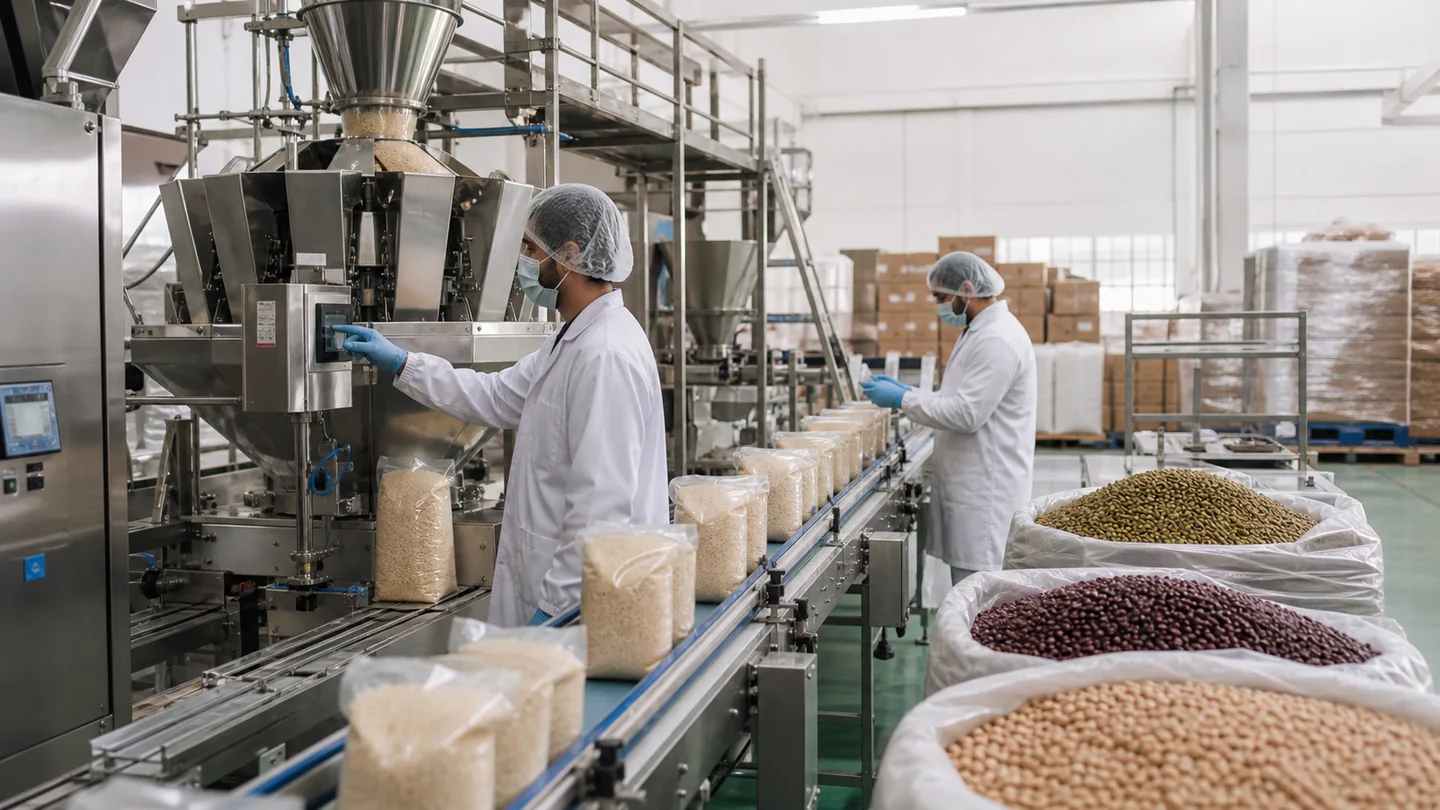
Private-label programs combine commodity procurement with packaging engineering, brand management, labelling, production planning and import execution. A visually approved design can still fail if the structure leaks, the barcode is unreadable, required text is missing or the pallet cannot survive the route. Successful programs treat the pack as a specification, not only as artwork.
This article outlines a practical buyer-supplier workflow for products such as rice, pulses and edible oils. Labelling and food-contact rules differ by destination and can change. Brand owners should obtain appropriate technical and regulatory review for every product, pack size and market before printing or shipping.
Write one packaging brief per SKU
Create a controlled brief for each product and net quantity. Record pack type, dimensions, material layers, barrier needs, closure, handle, tamper evidence, print method, case configuration and expected route. An 810-gram bottle, a ten-kilogram rice bag and a sixteen-kilogram food-service container require different tests and handling assumptions. State which properties are mandatory and which may be proposed by the packer.
- Product, SKU and nominal quantity
- Primary and secondary pack structure
- Closure, seal and opening features
- Distribution route and handling conditions
Separate content approval from design approval
Build an approved copy deck containing product name, ingredients where applicable, declarations, net quantity, storage information, responsible-party details, origin statements, date fields, lot coding and language versions required for the market. Then place that controlled text into the design. Regulatory or legal approval of content and brand approval of appearance are different decisions and should have named owners.
- Approved master copy and translations
- Mandatory statements and responsible entity
- Nutrition, allergen and ingredient fields when applicable
- Brand, regulatory and commercial sign-offs
Control artwork versions and prepress
Use a unique file name, version, date and approval status for every artwork. Check dielines, bleed, quiet zones, colour references, font conversion, barcode data and small-text legibility at actual print size. Require a final proof that clearly states whether colour and content are contractually representative. Retire obsolete versions so an old ingredient line or address cannot return to production.
- Dieline and print specification
- Version history and approval record
- Barcode verification and readable text
- Golden proof or agreed production reference
Qualify materials and pack performance
Request evidence appropriate to food contact, product compatibility and the destination. Test real production or representative packs for seal integrity, leakage, drop, compression, migration or barrier performance as relevant. Edible oils can challenge closures and polymers; dry foods need protection from moisture, infestation and seam failure. Agree the change-control process for resin, film structure, supplier, tooling or print method.
- Food-contact and compatibility review
- Product-specific performance tests
- Acceptance sample and test report linkage
- Notification and approval of material changes
Define filling, coding and quality checks
Specify nominal quantity, tolerances, checkweighing or filling controls, closure settings, seal inspection, label placement, coding format and line-clearance procedure. The contract packer should segregate artwork and components by SKU and retain traceability records. Agree inspection frequency, defect classification and the disposition of nonconforming packs. A pre-production sample is useful but does not replace monitoring of the actual run.
- Fill control and net-quantity checks
- Lot and date-code syntax
- Critical, major and minor defect criteria
- Retention samples and production traceability
Model minimums, lead time and landed cost
Packaging plates, cylinders, custom moulds and material runs can create minimum order quantities that differ from the commodity MOQ. Map artwork approval, component production, filling, inspection and shipping on one critical path. Cost all unused components, write-offs and change risk. Before launch, verify case dimensions, pallet pattern, container utilization, destination handling and an agreed process for damage or leakage claims.
- Component and finished-goods minimums
- Tooling, setup and artwork costs
- Critical-path milestones
- Pallet, container and claims assumptions
FAQ
Frequently asked questions
Who should approve private-label artwork?
Assign separate owners for regulatory or legal content, brand presentation, commercial data and technical print readiness. Final release should require all applicable approvals.
Is a digital mock-up enough for production?
No. It helps visualize the pack, but dimensions, materials, barcode, legibility, print behaviour, seal performance and production controls require technical proof and testing.
Why can packaging MOQ exceed product MOQ?
Printed film, bottles, caps, labels and cartons often have their own manufacturing minimums. The program should reconcile every component minimum with filling and sales forecasts.